A Shared Vision
  • Home
  • Página principal
  • Refer a Child
    • Refer a Child
    • Frequently Asked Questions
  • Remitir a un niño
    • Remitir a un niño
    • Preguntas mas frecuentes
  • Stay Informed
    • Latest News
    • Newsletters
    • Annual & Financial Reports
  • Manténgase informado
    • Últimas noticias
    • Boletines
  • Parent Resources
    • Parent Resources Introduction
    • Let's Play!
    • Learning Experiences© >
      • Learning Experiences©
      • Expanded Core Curriculum
    • Sensory Recipes >
      • Sensory Recipes Introduction
      • Sensory Recipes
    • Gift Ideas
    • Digital Resources >
      • Digital Resources Overview
      • Active Learning
      • Building Communication Skills
      • CVI
      • Dual Sensory Loss
      • Early Emergent Literacy
      • Eye Conditions
      • Eye Glasses for Your Child
      • Feeding
      • Meeting with Your Ophthalmologist
      • Orientation & Mobility
      • Patching for Your Child
      • Routines
      • Sleep
      • Strategies
      • Tactile Skills
      • Transition to Preschool
    • Other Great Organizations
  • Recursos para padres
    • Recursos para padres
    • A jugar!
    • Experiencias de aprendizaje© >
      • Experiencias de aprendizaje©
      • Currículo Básico Expandido
    • Recetas sensoriales© >
      • Recetas Sensoriales© introducción
      • Recetas sensoriales©
    • Ideas para regalar
    • Recursos digitales >
      • Recursos digitales
      • Afecciones oculares
      • Gafas para su hijo
      • Habilidades alimentarias
      • Reunión con su oftalmólogo
      • Estrategias
      • Transición al preescolar
  • For Our Families
    • Welcome New Families
    • Top digital resources for new families
    • Inspiring Families
    • Esmeralda's Day
  • Para nuestras familias
    • Bienvenida a las nuevas familias
    • Nuestros recursos favoritos
  • Vision Screening
    • Importance of Vision Screening
    • Protocol & Resources
    • Quickstart Guide
    • Vision Screening Training
    • Directory Pediatric Eye Doctors
    • Links & Documents >
      • Links
      • Email & Text Templates
      • PDF Documents
    • Information For Pediatric Eye Doctors
    • Well-Child Vision Screening for CVI
  • Donate Now
    • Donate Now
    • Value of Early Intervention
    • CO Child Care Tax Credit
  • Donar ahora
    • Donar ahora
    • El valor de la intervención precoz
  • Trainings & Education
    • Trainings & Education
  • About Us
    • Our Mission, Goal, Values
    • What We Do
    • Our Team
    • Our Board
    • Our Partners
  • Quiénes somos
    • Nuestra misión, objetivo y valores
    • Qué hacemos
    • Nuestro equipo
  • Contact Us
  • Contáctese con nosotros

Expanded Core Curriculum

Comprehensive Education for Visually Impaired Children

Vision-related skills for very young children who are blind or visually impaired

Learn about the Expanded Core Curriculum (ECC) and its importance in providing comprehensive education for visually impaired children. A Shared Vision offers resources and strategies to support the unique learning needs of visually impaired children.

Introduction

When your child turns three, they will stop receiving early intervention vision services and will probably begin some form of school-based programming. They will learn what sighted children do, from how to tell time to how to write a persuasive essay.

But to master these subjects (often known as the “core curriculum”) and complete their schoolwork – as well as to eventually live and work independently – your child will learn an additional set of skills known as the “expanded core curriculum” (ECC). They are referred to as “disability-specific skills” or “vision-related skills” because they are used specifically for individuals who are blind or visually impaired.
Early Intervention Teachers of the Visually Impaired start introducing ECC concepts when they work with families of very young children who are blind or visually impaired in their homes or community settings.

It’s important for families to understand these concepts early because they are part of the standard curriculum in school-based programming. The ECC helps build the foundation of skills that sighted children learn by observing the world around them or by imitating others.

What are the ECC domains and how do they apply to very young children who are blind or visually impaired?

Quick Links

  • ECC PDF
  • ECC Descriptions, Skills, and Activities

Assistive Technology

Technology is everywhere in society. Your child who is blind or has low vision will use technology in all facets of life. Sometimes it will be the everyday technology that all people use; sometimes, it will be assistive technology, and sometimes the two will overlap.

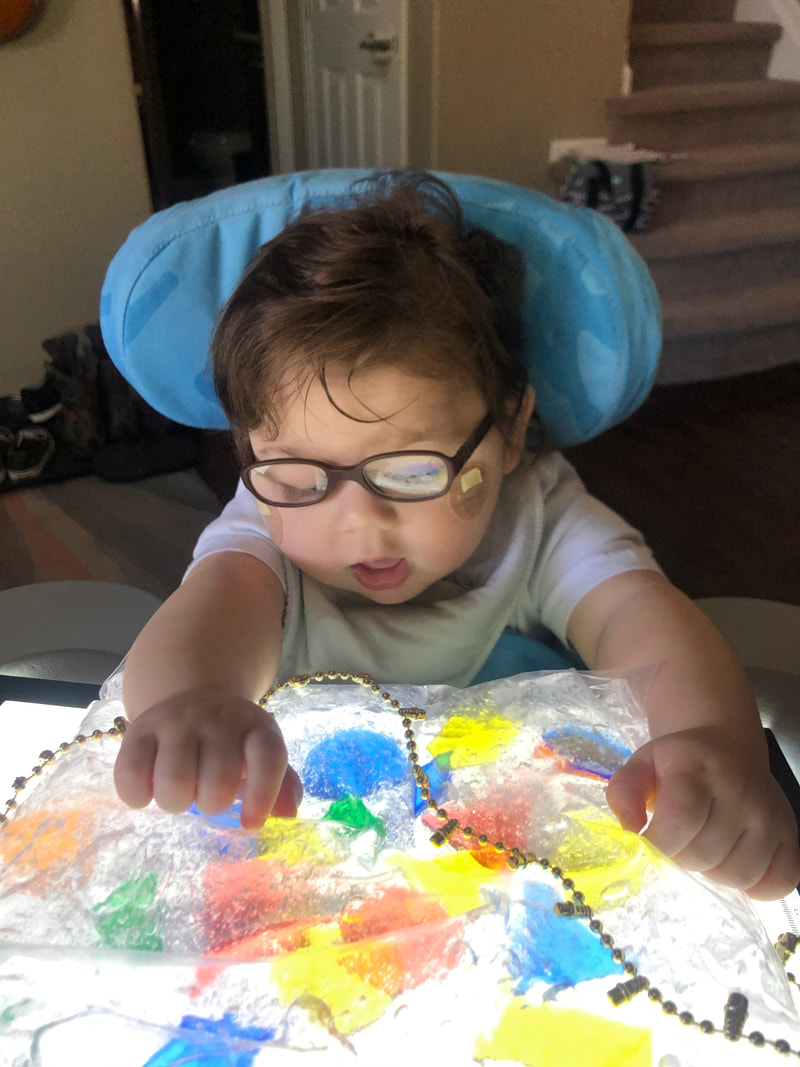
Assistive technology could be as simple as playing on a phone or tablet. A light box is another example of assistive technology that a very young child with visual impairment might already be using.

Young children with multiple disabilities might use some form of assisted communication device. When your child goes to grade school, they may benefit from an assistive technology assessment to determine what tools are appropriate to help access information and keep up with schoolwork, including learning to read and write braille.
Picture

Career Education

It may sound silly to think about career education when your child is so young, but so many foundational skills are needed to be successful in a job setting or a home setting.

Career education focuses on learning about the environment, following directions and schedules, and developing early organizational strategies (i.e., sorting, matching, and pairing). In addition, this is the time to introduce good work habits and personal responsibility, such as putting away one’s belongings.

Finally, just like same-age peers who are sighted, preschool children with visual disabilities should explore the roles adults in their lives play. This exploration becomes a foundation for career education and imaginative role-playing.
Picture

Compensatory Skills

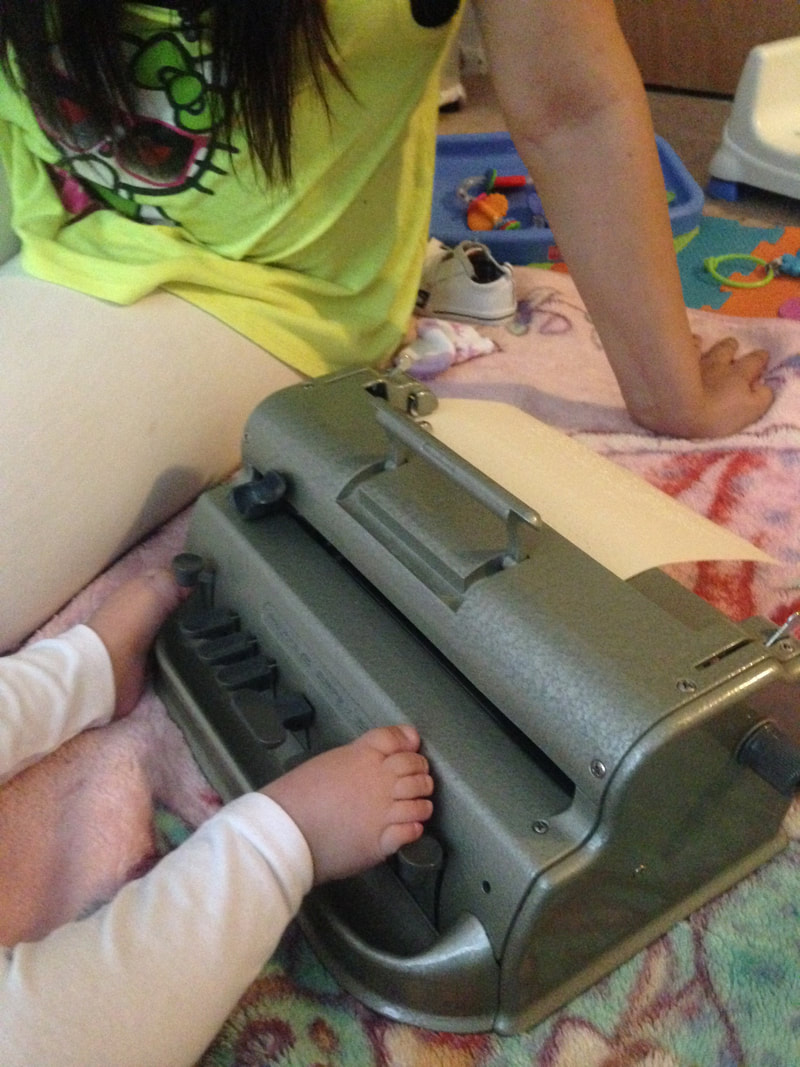
Disability-specific compensatory skills refer to using strategies, techniques, and adapted materials that children with blindness or low vision need to access the general education and common core curricula. They are compensating for vision impairment using specific tools. These include light boxes, braille reading and writing methods, regular print with optical devices, large print, sign language, and voice output technology.

Very young children need to play with these tools early just as sighted children scribble with crayons or look at picture books before they learn to read or write.

A crucial component of compensatory skills is concept development. Full-sighted children learn from whole to part, meaning that they can see the big picture and then examine details. However, many children who are blind or have low vision must learn from part to whole, as they only experience discrete parts of an object, one at a time, and then piece those parts together. Without instruction in appropriate systematic search strategies, random or unsystematic exploration results in an incomplete understanding of concepts.

That’s why it’s important to use real objects when teaching a new concept to a child who is visually impaired. That way the child can experience it with all their senses. For example, a dog is the sum of its parts – soft fur, four legs, floppy ears, wet tongue, wagging tail, and noisy bark.

Spatial understanding is another part of concept development. It refers to basic concepts such as “on,” “behind,” “underneath,” “in,” and “out.” Children who have a solid understanding of spatial concepts and how objects in the environment are related to their own bodies will be able to follow directions and travel independently in home, school, and playground environments. For older students, these foundational concepts empower safe and independent community travel.
Picture

Independent Living Skills

Independent living skills include the tasks and functions people perform in daily life to increase their independence and contribute to the family structure. That includes personal hygiene, eating skills, food preparation, time and money management, clothing care, and household chores.

While some children will always need help with daily care, there are many other ways they can participate and help, starting at birth with eating skills and sleep regulation.

As they get older, they can help with bathing, dressing, toileting, keeping track of their belongings, and doing simple chores. For children with typical vision, those skills are learned through watching and imitation. Children with visual impairment require more adaptations and intentional teaching to learn these skills.

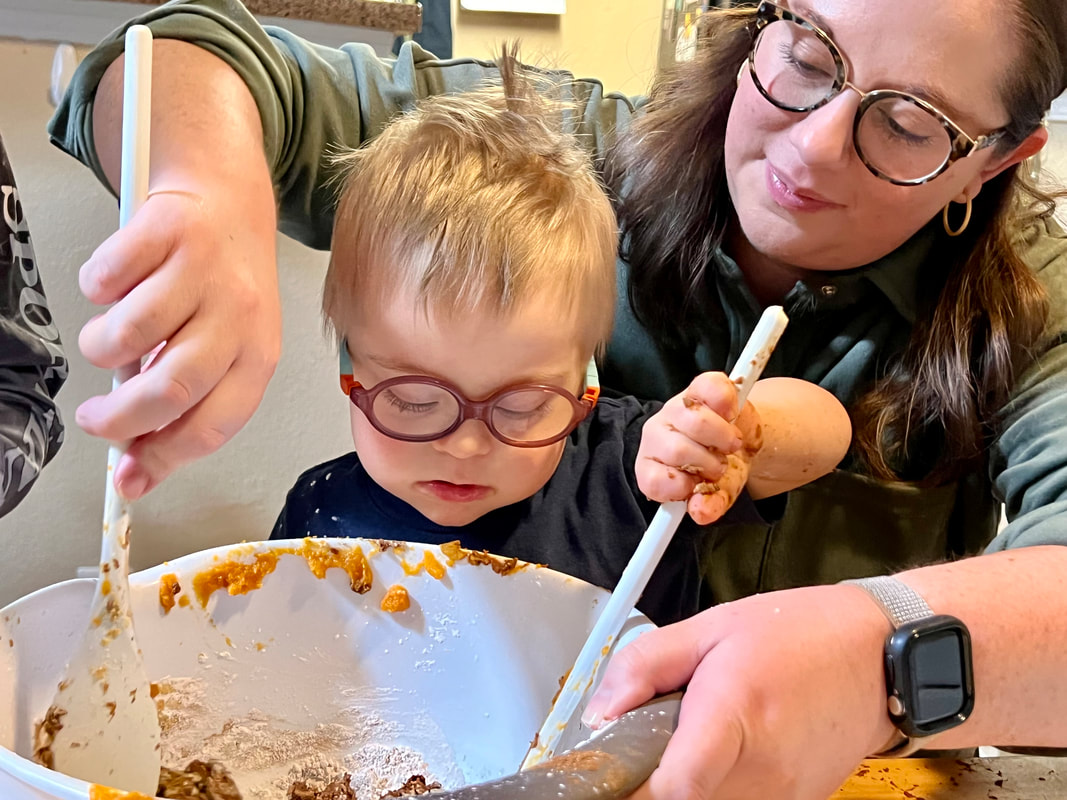
A Shared Vision’s collection of Learning Experiences are fun activities families can try with their EI-TVI to help build early independent living skills, like sorting laundry, making pumpkin pie play dough, or packing a purse.
Picture
Clark with mom, Mallory, making Pumpkin Pie Play Dough

Orientation and Mobility

Orientation refers to the ability to know where you are and where you want to go. Mobility refers to the ability to move safely, efficiently, and effectively from one place to another. O & M lessons incorporate skills ranging from basic body image and awareness, spatial relationships, and purposeful movement to cane usage, recognizing cues and landmarks, travel in the community, and use of public transportation.

For babies and toddlers who are blind or have low vision, O&M entails encouraging movement and developing foundational concepts and skills which are “the building blocks” of O&M.

O&M specialists talk with the family about the typical sequence of O&M skills and the family’s vital role in the child’s development.

The family and O&M specialist then work with the child informally through play to 1) encourage purposeful movement, developing the child’s gross and fine motor skills; 2) recognize what they are seeing, hearing, smelling, and touching; 3) learn body parts and how they move; and 4) learn concepts about the child’s surroundings, beginning with the immediate environment.

If the child has low or high muscle tone or any additional disability that may hinder movement, the mobility team will include a physical and/or occupational therapist or another additional service provider. Encouraging movement, including the motivation to move, is a team effort.

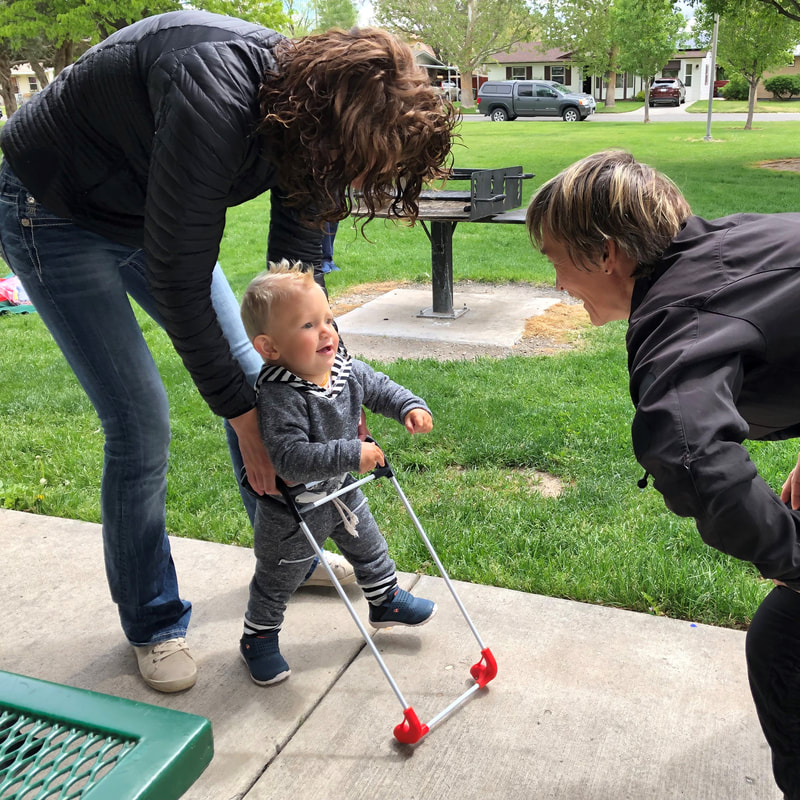
As the young toddler begins moving independently, the O&M specialist will teach the child beginning techniques to move safely, including use of a sighted guide, use of an early mobility device such as a push toy or small cane, and to use protective techniques such as holding a hand in front of the face when walking independently.

When traveling outdoors, the team will ensure direct or indirect sunlight doesn’t hinder the child’s vision. The child will wear a brimmed hat and a good pair of sunglasses.
Picture
Bairon with mom, Monee, and Kimala (EI-TVI)

Recreation and Leisure

Recreation and leisure relate to what people choose to do in their free time, time that is not otherwise used for work, school, or other activities like appointments and chores. It is time to pursue personal interests and enjoyable activities or hobbies.

Research has shown that recreation improves quality of life for everyone, including people with disabilities. People who engage in recreational activities will benefit by having improved cardiovascular function, better ability to sleep, improved self-esteem, increased stamina, and decreased stress levels.

In addition, recreation is a highly social phenomenon organized around friendships or family groups, and these social interactions buffer the effects of stress on health.

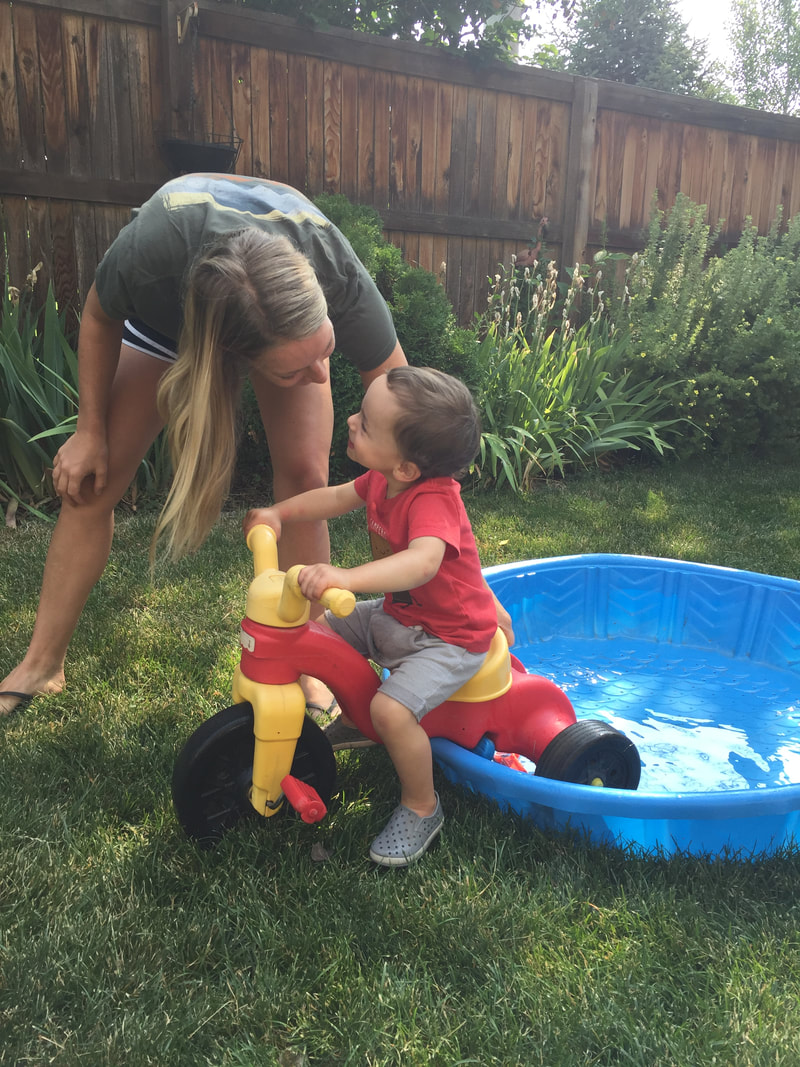
Singing songs, beating on a drum, tossing a ball, movement games, board games, manipulative toys, gardening, or going on a nature walk are all leisure activities that young children with visual impairment can experience with their caregivers or other family members, although they may require adaptations.
Picture
Emmett with mom, Rebecca

Self-Determination

This area of the ECC highlights the importance of developing confidence. Self-determination involves a child identifying their own interests, values, and motivations, as well as a personal understanding of their abilities and limitations. The child then takes this information to explore how this personal awareness relates to various life choices.

Self-determination is particularly important for children who are blind or have low vision. The skills leading to enhanced self-determination, including goal setting, problem-solving, and decision making, allow children to assume greater responsibility and control of their lives from early developmental milestones throughout the high school transition into postsecondary education and careers. They learn to take control of their own lives and become better advocates for themselves.

For a very young child with a visual impairment, self-determination starts with choice making. “Do you want the red cup or the blue cup with your lunch?” “Do you want to play with the sensory bin or read a book together?”
Picture
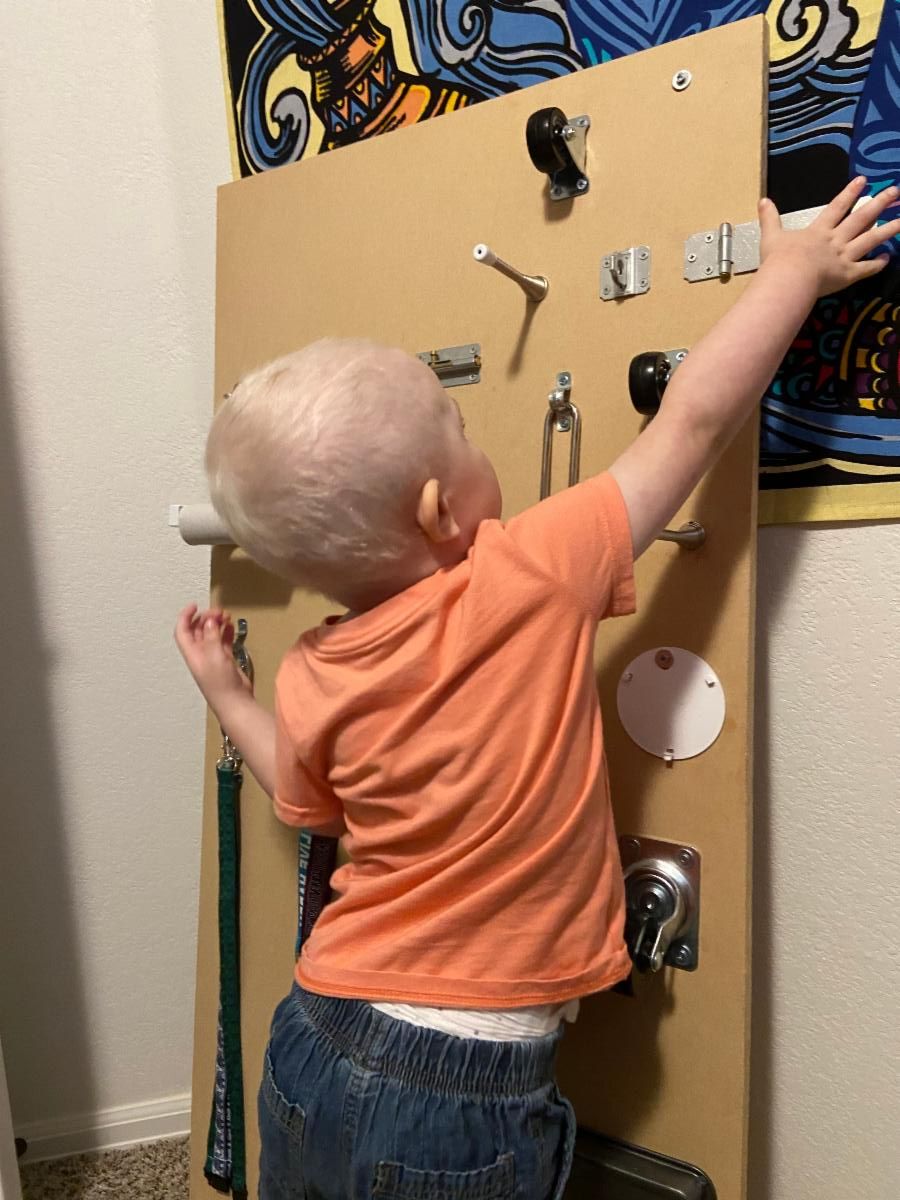
Havyk exploring the busy board his father made

Sensory Efficiency

Sensory efficiency addresses the use of residual vision, hearing, touch, smell, taste, and other systems to enable or enhance access to the environment.

For example, learning how to use touch and smell rather than visual cues to identify one’s personal possessions or one’s location or using hearing and the other senses to identify people one knows without visual cues fits into this area.

Children with blindness or low vision especially benefit from refining their use of touch to gain access to environmental information. By honing their tactile sensitivity, they improve their braille reading skills and ability to distinguish subtle texture changes and differences. Practice with tactile efficiency enhances a child’s ability to explore and interpret the environment.

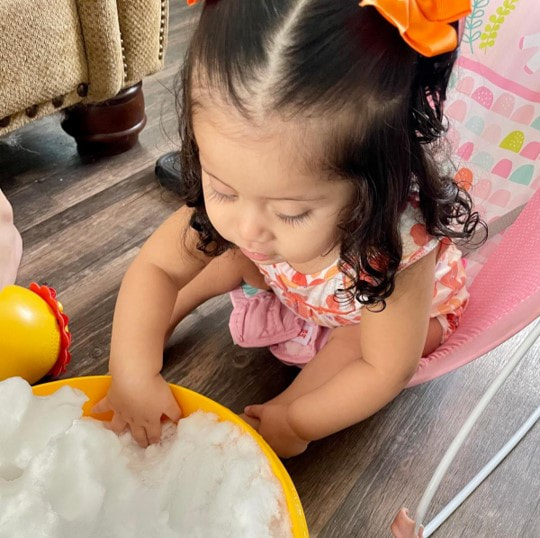
Building sensory efficiency skills is easy to do at home with young children because it can be incorporated into playtime with sensory bins, container play, the outdoors, cooking, and other fun activities.
Picture
Esmeralda exploring snow!

Social Interaction Skills

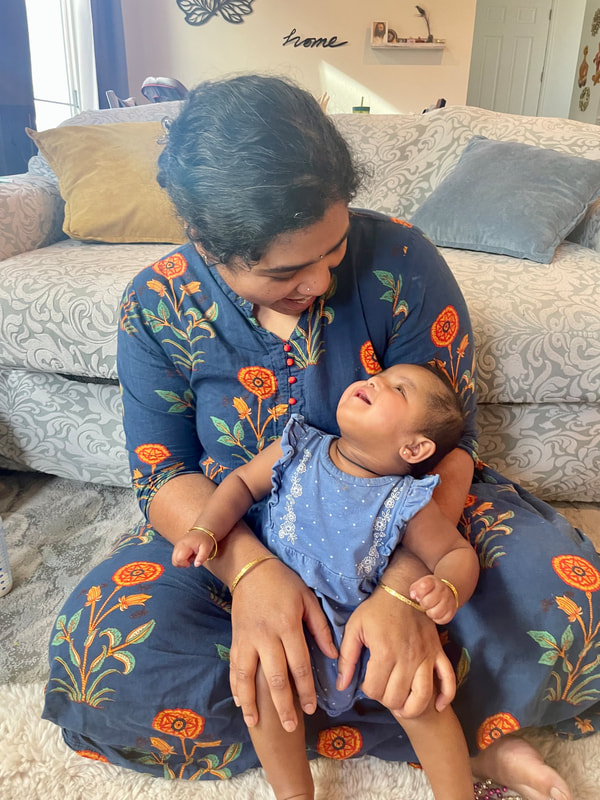
Having appropriate social skills can often mean the difference between social isolation and a fulfilling life as an adult. While sighted children learn by observing how other people interact with each other, children who are blind or visually impaired must be taught these skills using specific strategies, starting at birth.

It’s critical for parents and other caregivers to bond with their child so that they feel safe and loved. Any medical issue, including vision impairment, can make bonding and development of typical social skills more challenging.

Infants and toddlers with blindness or low vision may give their caregivers different cues for attention than those given to parents by sighted children.

Instead of visual cues and eye contact, these interactions use hearing, touch, smell, and taste to establish social connections. These children benefit from caregivers providing auditory descriptions and cues, such as speaking to explain what’s happening before touching the baby or bringing food to the child’s mouth. It also involves allowing the child to react to what you’re doing with a minute or so of “wait time.”

Early Intervention Teachers of the Visually Impaired teach caregivers how to engage and interact with their child using specific communication strategies
Picture

References

  • "ECC. Activities, Ideas, and Resources for Developing ECC Skills." American Printing House, ConnectCenter. Click HERE for more.
  • J.C. Greeley and Melinda Doyle McCall, Teaching Life Differently: The Expanded Core Curriculum for Babies and Young Children with Visual Impairments, Perkins School for the Blind, Anchor Center for Blind Children, 2018. Click HERE to order on Amazon.
HOME (Mapa del sitio en español)
REFER A CHILD
Refer a Child

Frequently Asked Questions
STAY INFORMED
Latest News

Newsletters
Annual & Final Reports
PARENT RESOURCES
Introduction
Let's Play
Learning Experiences©
Sensory Recipes
Gift Ideas
Digital Resources
Other Great Organizations
FOR OUR FAMILIES
Welcome New Families

Top Digital Resources For New Families
Inspiring Families
Esmeralda's Day
VISION SCREENING
Importance of Vision Screening
Protocol & Resources
Quickstart Guide
Vision Screening Training
Directory of Pediatric Eye Doctors
Links & Documents
DONATE NOW
Donate Now

Value of Early Intervention
CO Child Care Tax Credit
TRAINING & EDUCATION
Training & Education

ABOUT US
Our Mission, Goal, Values
What We Do
Our Team
Our Board
Our Partners

A Shared Vision: Partners in Pediatric Blindness & Visual Impairment

EIN 81-4227664
Privacy Policy
Certificate of Insurance
  • Home
  • Página principal
  • Refer a Child
    • Refer a Child
    • Frequently Asked Questions
  • Remitir a un niño
    • Remitir a un niño
    • Preguntas mas frecuentes
  • Stay Informed
    • Latest News
    • Newsletters
    • Annual & Financial Reports
  • Manténgase informado
    • Últimas noticias
    • Boletines
  • Parent Resources
    • Parent Resources Introduction
    • Let's Play!
    • Learning Experiences© >
      • Learning Experiences©
      • Expanded Core Curriculum
    • Sensory Recipes >
      • Sensory Recipes Introduction
      • Sensory Recipes
    • Gift Ideas
    • Digital Resources >
      • Digital Resources Overview
      • Active Learning
      • Building Communication Skills
      • CVI
      • Dual Sensory Loss
      • Early Emergent Literacy
      • Eye Conditions
      • Eye Glasses for Your Child
      • Feeding
      • Meeting with Your Ophthalmologist
      • Orientation & Mobility
      • Patching for Your Child
      • Routines
      • Sleep
      • Strategies
      • Tactile Skills
      • Transition to Preschool
    • Other Great Organizations
  • Recursos para padres
    • Recursos para padres
    • A jugar!
    • Experiencias de aprendizaje© >
      • Experiencias de aprendizaje©
      • Currículo Básico Expandido
    • Recetas sensoriales© >
      • Recetas Sensoriales© introducción
      • Recetas sensoriales©
    • Ideas para regalar
    • Recursos digitales >
      • Recursos digitales
      • Afecciones oculares
      • Gafas para su hijo
      • Habilidades alimentarias
      • Reunión con su oftalmólogo
      • Estrategias
      • Transición al preescolar
  • For Our Families
    • Welcome New Families
    • Top digital resources for new families
    • Inspiring Families
    • Esmeralda's Day
  • Para nuestras familias
    • Bienvenida a las nuevas familias
    • Nuestros recursos favoritos
  • Vision Screening
    • Importance of Vision Screening
    • Protocol & Resources
    • Quickstart Guide
    • Vision Screening Training
    • Directory Pediatric Eye Doctors
    • Links & Documents >
      • Links
      • Email & Text Templates
      • PDF Documents
    • Information For Pediatric Eye Doctors
    • Well-Child Vision Screening for CVI
  • Donate Now
    • Donate Now
    • Value of Early Intervention
    • CO Child Care Tax Credit
  • Donar ahora
    • Donar ahora
    • El valor de la intervención precoz
  • Trainings & Education
    • Trainings & Education
  • About Us
    • Our Mission, Goal, Values
    • What We Do
    • Our Team
    • Our Board
    • Our Partners
  • Quiénes somos
    • Nuestra misión, objetivo y valores
    • Qué hacemos
    • Nuestro equipo
  • Contact Us
  • Contáctese con nosotros