A Shared Vision
  • Home
  • Página principal
  • Refer a Child
    • Refer a Child
    • Frequently Asked Questions
  • Remitir a un niño
    • Remitir a un niño
    • Preguntas mas frecuentes
  • Stay Informed
    • Latest News
    • Newsletters
    • Annual & Financial Reports
  • Manténgase informado
    • Últimas noticias
    • Boletines
  • Parent Resources
    • Parent Resources Introduction
    • Let's Play!
    • Learning Experiences© >
      • Learning Experiences©
      • Expanded Core Curriculum
    • Sensory Recipes >
      • Sensory Recipes Introduction
      • Sensory Recipes
    • Gift Ideas
    • Digital Resources >
      • Digital Resources Overview
      • Active Learning
      • Building Communication Skills
      • CVI
      • Dual Sensory Loss
      • Early Emergent Literacy
      • Eye Conditions
      • Eye Glasses for Your Child
      • Feeding
      • Meeting with Your Ophthalmologist
      • Orientation & Mobility
      • Patching for Your Child
      • Routines
      • Sleep
      • Strategies
      • Tactile Skills
      • Transition to Preschool
    • Other Great Organizations
  • Recursos para padres
    • Recursos para padres
    • A jugar!
    • Experiencias de aprendizaje© >
      • Experiencias de aprendizaje©
      • Currículo Básico Expandido
    • Recetas sensoriales© >
      • Recetas Sensoriales© introducción
      • Recetas sensoriales©
    • Ideas para regalar
    • Recursos digitales >
      • Recursos digitales
      • Afecciones oculares
      • Gafas para su hijo
      • Habilidades alimentarias
      • Reunión con su oftalmólogo
      • Estrategias
      • Transición al preescolar
  • For Our Families
    • Welcome New Families
    • Top digital resources for new families
    • Inspiring Families
    • Esmeralda's Day
  • Para nuestras familias
    • Bienvenida a las nuevas familias
    • Nuestros recursos favoritos
  • Vision Screening
    • Importance of Vision Screening
    • Protocol & Resources
    • Quickstart Guide
    • Vision Screening Training
    • Directory Pediatric Eye Doctors
    • Links & Documents >
      • Links
      • Email & Text Templates
      • PDF Documents
    • Information For Pediatric Eye Doctors
    • Well-Child Vision Screening for CVI
  • Donate Now
    • Donate Now
    • Value of Early Intervention
    • CO Child Care Tax Credit
  • Donar ahora
    • Donar ahora
    • El valor de la intervención precoz
  • Trainings & Education
    • Trainings & Education
  • About Us
    • Our Mission, Goal, Values
    • What We Do
    • Our Team
    • Our Board
    • Our Partners
  • Quiénes somos
    • Nuestra misión, objetivo y valores
    • Qué hacemos
    • Nuestro equipo
  • Contact Us
  • Contáctese con nosotros
Early & Emergent Literacy

Making a Story Box

Making a Story Box

Articles by Norma M. Drissel
An introduction to story boxes for young children who are blind or visually impaired, deafblind or with multiple disabilities.

What is a Story Box?

It is simply a collection of items in a box or bag that corresponds to the items mentioned in a story. A Story Box is a way for young children with visual impairments to experience a story. It is an early literacy event that can easily fit into your daily routines as well as a tool to enhance the learning of concepts. In short, it is a fun, interactive learning experience for children and adults alike.

Remember:

  1. It takes more time to figure out what an object or shape is through tactual exploration than through vision. A tactual learner needs to examine parts of an item separately then put the information they have gathered together to gain full understanding of the item.
  2. Words are just symbols representing ideas and concepts. Without meaning words are a series of disconnected sounds and letters. Hands-on experiences help to provide meaning to words.
  3. You need not present all the items in a box with each reading. Determine your child’s interest and attention so as not to overwhelm her with stuff.
  4. Share your story boxes with young sighted children. They are very popular.

Why Story Boxes?

The purpose of a story box is to create hands-on literacy experiences for your child. Educators have long emphasized the importance of tactual exploration i.e. hands-on learning for young children with Visual Impairments. This is important not just for future Braille readers who will be using their finely tuned sense of touch to discriminate letters and to decode words, but rather for all young children so that they can take in information, build concepts, and further understand their world. Purposeful exploration involves thinking, concept building. Children gather information through the experiences that they have. This is how they develop an understanding of how things relate. These experiences give meaning to their lives through the development of concepts.

Literacy emerges from hands-on experiences for all children. Sighted children’s experiences are rich with opportunities for learning that occur by chance, however, children with Visual Impairments seldom, if ever, take in information accidentally. Yet teachers often expect that the youngster with blindness comes to school with the same information that sighted children have picked up on TV, through pictures, etc. Hence, the importance of hand-on experiences such as Story Boxes for young learners with blindness.

Step 1: Books, Books Everywhere: Choosing a Story

When selecting a story for your child, choose one that is simple and tells about familiar objects and concepts. Story Boxes can range from very concrete hands-on to the more complex and abstract.

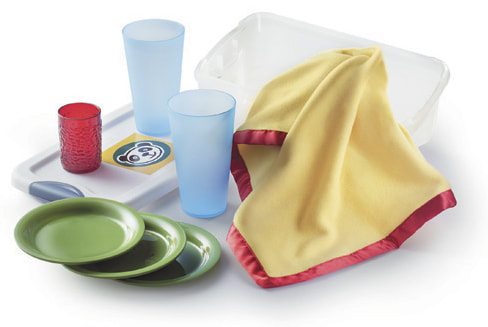
Initially a box might contain items that your child uses during daily routines. You can make up a story about the routine or family activity. Your child may be the main character of your story. It can be about a trip to Grandparents, bath time or mealtime, a playtime with dad. No book is really needed. Choose books about familiar activities. Those stories will be meaningful for your child.
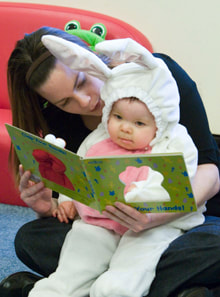
Picture
  • Variety is fun. Expose you child to different types of books. Feel free to adapt them, to make the book more accessible and interesting. Simple board books can be enhanced with Braille Dymo tape. Twin Vision books provide enrichment for siblings as well. Sound books can be made accessible by affixing a little texture to the spot one must depress to activate.
  • Choose books that have characters and items that are readily available. Remember the complexity of the story and the number of items presented should be suited to you child. Often simple is better.
  • Choose a story to match you child’s attention span. Short and sweet works well for young children.
  • Choose a book that does not rely on visual experiences or pictures to provide meaning to the story.
  • Choose books that are predictable and that have rhythm and rhyme.

Step 2: Getting It All Together: How To Actually Construct the Story Box  

  • Choose an appropriate book. See some suggestions here.
  • Select corresponding items. You may choose to go on a shopping spree but often collecting familiar objects from you household will do just fine.
Picture
  • Place the book and items in a storage container. Although many folks us Zip-Lock bags or shoe boxes, sweater-sized plastic containers are preferable as they are likely to stack, thus affording you an opportunity to establish a story box “library”. They are also sturdy enough to bear up under the wear and tear of children’s hands. (Note: prying these boxes open is a beneficial activity which develops the hand strength needed to use Braille).
  • Label the exterior of the container. A tactile marker will enable you and your child to “read” the title; e.g. three pieces of fake fur might be a good label for the story of Goldilocks and the Three Bears.

Step 3: Reading the Story

  • Handle the objects in the box one at a time giving your child lots of time to explore. Comment on the item’s size, its shape, its texture and name the item. Children with blindness benefit from an adult’s modeling the function of the item. If it’s a spoon, pretend to eat. If it’s a shoe, try it on. Allow the child to explore freely. Compare items.
  • After tactually exploring the items place them aside. Read the story and once again present the items as they are mentioned in the story. Avoid clutter. Too many items at once can be very confusing for young children with blindness.
  • When reading, have fun. Use sound effects and dramatic intonation to peak you child’s interest.
  • When you are finished with the story box put clear closure on the activity by having your child help place the objects back in the box, thus providing another opportunity to handle the objects.
Articles by Norma M. Drissel, Perkins School for the Blind. Storybox Ideas from Norma Drissel. Making a Story Box. Click HERE for PDF.
Photo: Paths to Literacy
HOME (Mapa del sitio en español)
REFER A CHILD
Refer a Child

Frequently Asked Questions
STAY INFORMED
Latest News

Newsletters
Annual & Final Reports
PARENT RESOURCES
Introduction
Let's Play
Learning Experiences©
Sensory Recipes
Gift Ideas
Digital Resources
Other Great Organizations
FOR OUR FAMILIES
Welcome New Families

Top Digital Resources For New Families
Inspiring Families
Esmeralda's Day
VISION SCREENING
Importance of Vision Screening
Protocol & Resources
Quickstart Guide
Vision Screening Training
Directory of Pediatric Eye Doctors
Links & Documents
DONATE NOW
Donate Now

Value of Early Intervention
CO Child Care Tax Credit
TRAINING & EDUCATION
Training & Education

ABOUT US
Our Mission, Goal, Values
What We Do
Our Team
Our Board
Our Partners

A Shared Vision: Partners in Pediatric Blindness & Visual Impairment

EIN 81-4227664
Privacy Policy
Certificate of Insurance
  • Home
  • Página principal
  • Refer a Child
    • Refer a Child
    • Frequently Asked Questions
  • Remitir a un niño
    • Remitir a un niño
    • Preguntas mas frecuentes
  • Stay Informed
    • Latest News
    • Newsletters
    • Annual & Financial Reports
  • Manténgase informado
    • Últimas noticias
    • Boletines
  • Parent Resources
    • Parent Resources Introduction
    • Let's Play!
    • Learning Experiences© >
      • Learning Experiences©
      • Expanded Core Curriculum
    • Sensory Recipes >
      • Sensory Recipes Introduction
      • Sensory Recipes
    • Gift Ideas
    • Digital Resources >
      • Digital Resources Overview
      • Active Learning
      • Building Communication Skills
      • CVI
      • Dual Sensory Loss
      • Early Emergent Literacy
      • Eye Conditions
      • Eye Glasses for Your Child
      • Feeding
      • Meeting with Your Ophthalmologist
      • Orientation & Mobility
      • Patching for Your Child
      • Routines
      • Sleep
      • Strategies
      • Tactile Skills
      • Transition to Preschool
    • Other Great Organizations
  • Recursos para padres
    • Recursos para padres
    • A jugar!
    • Experiencias de aprendizaje© >
      • Experiencias de aprendizaje©
      • Currículo Básico Expandido
    • Recetas sensoriales© >
      • Recetas Sensoriales© introducción
      • Recetas sensoriales©
    • Ideas para regalar
    • Recursos digitales >
      • Recursos digitales
      • Afecciones oculares
      • Gafas para su hijo
      • Habilidades alimentarias
      • Reunión con su oftalmólogo
      • Estrategias
      • Transición al preescolar
  • For Our Families
    • Welcome New Families
    • Top digital resources for new families
    • Inspiring Families
    • Esmeralda's Day
  • Para nuestras familias
    • Bienvenida a las nuevas familias
    • Nuestros recursos favoritos
  • Vision Screening
    • Importance of Vision Screening
    • Protocol & Resources
    • Quickstart Guide
    • Vision Screening Training
    • Directory Pediatric Eye Doctors
    • Links & Documents >
      • Links
      • Email & Text Templates
      • PDF Documents
    • Information For Pediatric Eye Doctors
    • Well-Child Vision Screening for CVI
  • Donate Now
    • Donate Now
    • Value of Early Intervention
    • CO Child Care Tax Credit
  • Donar ahora
    • Donar ahora
    • El valor de la intervención precoz
  • Trainings & Education
    • Trainings & Education
  • About Us
    • Our Mission, Goal, Values
    • What We Do
    • Our Team
    • Our Board
    • Our Partners
  • Quiénes somos
    • Nuestra misión, objetivo y valores
    • Qué hacemos
    • Nuestro equipo
  • Contact Us
  • Contáctese con nosotros